
Who would’ve thought eating enough would be so hard.
I know, I know, most of you out there don’t have any trouble meeting your daily caloric needs and then some. If this is too sensitive a topic you have my permission to stop reading now, and even toss in an expletive or two.

Thanks for reading on!
I freely admit that as an endurance athlete I do not meet the profile of your standard middle-age American. I can go to Outback Steakhouse on Friday night and cut loose, then burn it all off Saturday morning at run club. But I don’t, in part because I care about what I eat, and in part because I just can’t eat a big meal anymore.
Unsurprisingly I couldn’t gain any weight, and when I made a push to, it would come right back off. When I told this to Skip, my trainer, he (strongly) advised me to get in more protein in particular. So I upped my consumption of dairy and eggs, and tried to eat more meat.
Then blood work at my recent physical showed a disturbing rise in LDL cholesterol.
“It’s not your lifestyle,” my NP assured me. Her best guess was body changes as I get older, and she prescribed a statin. And she agreed I should be eating more and tracking my nutrition.
So I made some changes. First, I made an appointment with a nutritionist. Second, I began a food diary. This means I weigh and track (just about) everything that I eat or drink that contains calories. Third, I cut back on full-fat dairy and pastries.
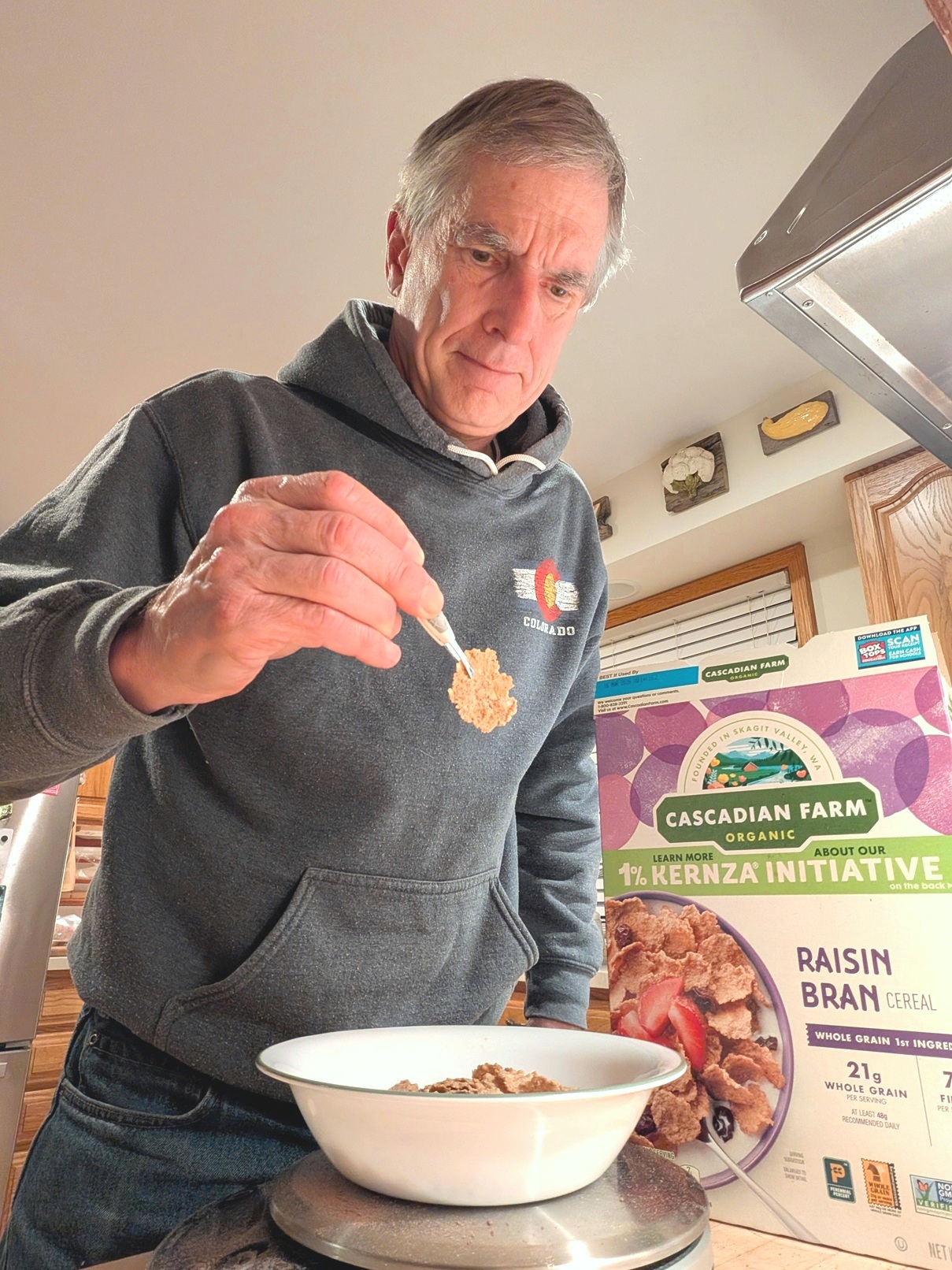
The nutritionist looked at my training regimen and estimated I need in the neighborhood of 3,000 calories per day. Because I’d been training a bit less than usual I set a goal of 2,800 calories. She agreed with my trainer that around 140 grams of protein per day was a reasonable amount.
I began with a three-day test, weighing portions and looking up caloric information on the Internet. Then I began to track (almost) every day, using a fitness app.
The result?
I was underfueling by several hundred calories per day. And coming up short on protein.

This looks worse than it is because the chart floor is 2,000 calories, not 0.
This is bad in at least two ways. Not getting enough calories and protein means less muscle gain, despite my workouts, and it can affect my performance at endurance events. I already knew I wasn’t eating enough during an ultra, which may have contributed to some less-than-expected performances this year. Turns out I’m not getting enough between events, either.
And the result of cutting back on dairy? Predictable. It became even harder to reach my calorie and protein goals.
It was time to up the eating game, both in quantity and quality. More lean meat, lowfat yogurt and cheese, nuts and peanut butter, with plenty of fresh fruit and veggies of course. And more snacking, even when I’m not hungry. This has improved things, but it’s still not enough to reach my calorie and protein goals, so I’m also using supplements in the form of protein drinks and bars.
One each per day gets me there, or close enough. However, to reduce the added sugar but keep their drinks and bars tasty, a number of brands use sugar alcohols for sweetness. And I found out that sugar alcohols give me bloating and gas. So I switched to fairlife Core Power for a protein drink and Clif Builder bars, which don’t use them. They add a bit more sugar and saturated fat, but the digestive issue is gone.
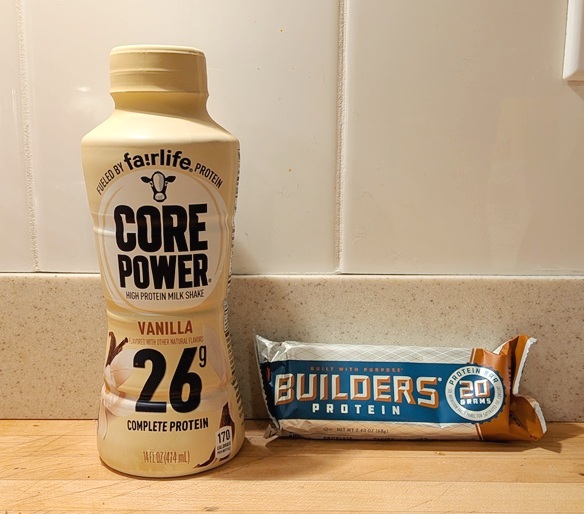
Note: I don’t receive any compensation for mentioning these. (Although I’m open to it.)
So how’s it working? Hard to tell because I had some kind of virus earlier this month. But I’m now recovered, and I cleared my driveway of several inches of wet snow this morning. We’ll see how the winter running goes!
 RUN COFFEE WRITE